Popular Conditions & Diets

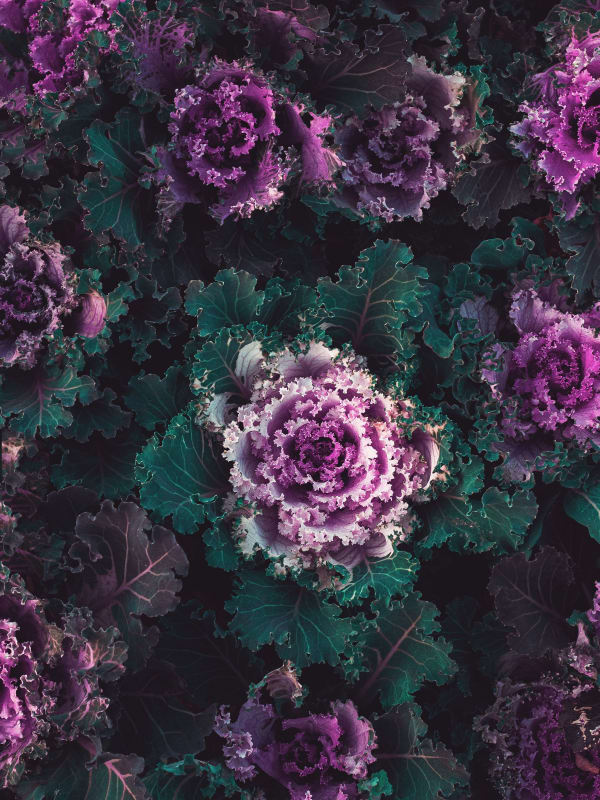
It’s true: kale, cabbage, cauliflower, Brussels sprouts, collard greens, and kohlrabi all come from the same vegetable, their singular ancestor brassica oleracea. By selective breeding for distinctive qualities thousands of years ago, growers gradually distinguished the species we know today from the original parent plant.
The 1990s saw a massive resurgence of kale’s popularity due to a dawning collective realization of its nutritional potential. In a reasonably short period, we have come to expect red, black dinosaur, and green curly kale as staple offerings at any decent farmer’s market and supermarket.
Previously, it wasn’t nearly as popular! It was likely used more in landscape decoration than in kitchens across North America for most of the 20th century. However, traditional recipes for classic dishes featuring kale abound across Europe, from Portugal to the Netherlands. Its inclusion harkens back to the Medieval Era when kale enjoyed popularity as an easily grown and winter-hardy crop.
While sulforaphane is often associated with broccoli (another brassica legend), kale may contain significantly more of it.
This phenomenal phytochemical, common in varying degrees among brassica veggies, has received a tremendous amount of scientific recognition in recent years for its demonstrated ability to treat and prevent various forms of cancer.
Sulforaphane activates a cellular gene signalling pathway called NrF2 that triggers a highly beneficial metabolic cascade. The results are a massive reduction in systemic inflammation and an enormous increase in antioxidant protection.
Kale’s nutrient power is frankly undeniable. It’s a great source of iron, magnesium, and potassium- all commonly deficient- and presents a more complete and well-rounded mineral profile than its other brassica cousins. Vitamins A, K, and C are found in kale so abundantly that they put it head and shoulders above the rest.
All brassica family vegetables are an excellent source of fibre and B vitamins, two essential building blocks to a healthy diet. Factor in the sulforaphane and it becomes clear: kale is the real deal.
Another great thing about kale is its versatility. It can be cooked or enjoyed raw or cooked, and added to soups, salads, sandwiches, or wraps. The sky’s the limit. And whether it’s curly green, magenta red, or lacinato - the black dinosaur, there is little to lose and much to gain from including this bonafide superfood in your next supermarket selection.
Share this article