Popular Conditions & Diets

Known by early Greek and Roman civilizations as the Nectar of the Gods, referred to in the Hittite code, found within ancient Babylonian and Sumerian cuneiforms, and Egyptian and Indian sacred scripts, honey has been written into history since, well, since history began to be written.
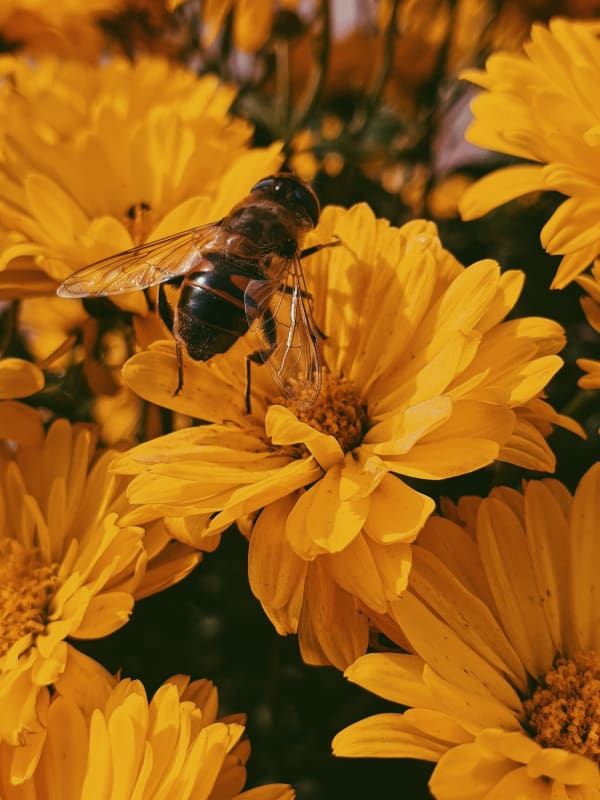
Each teaspoon of delicious golden honey contains the nectars of 5,000 summer flowers, personally collected one flower at a time by a devoted worker bee.
Though a painstakingly complex process, honey is essentially the storage format of bee food, meticulously tended to and preserved in the comb for hungrier winter months.
And store it does: honey never goes bad. If you found a jar of it deep in the catacombs of the Egyptian pyramids, you would be able to enjoy it as though it had been tapped from the hive yesterday.
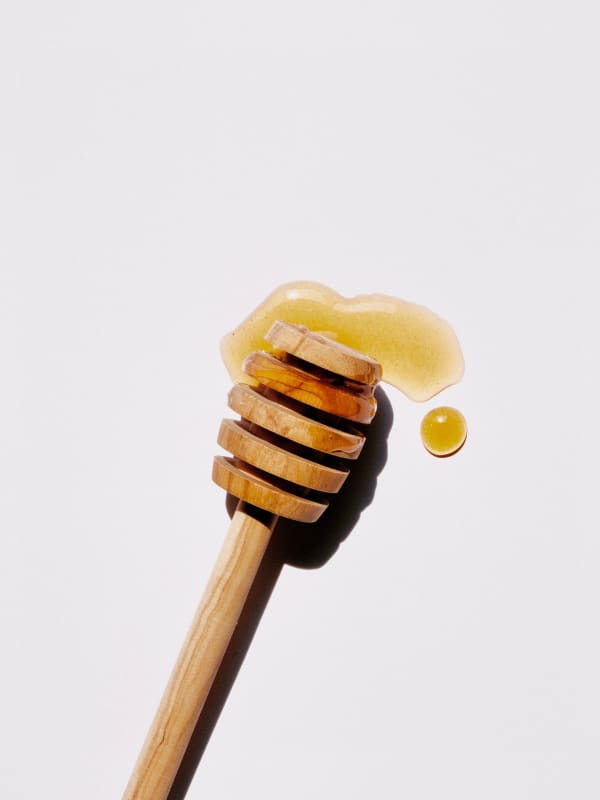
Fructose, glucose, maltose, erlose, panose, and maltotriose …
On a microscopic level, honey is a sophisticated crystalline matrix of mono, di, and more complex oligosaccharides aka sugars! Some of these more elaborate sugar structures form perfect prebiotics. Prebiotics are essentially food for healthy bacteria in the gut.
Adding honey to probiotic foods like yogurt is a great way to create the perfect combination of probiotics and prebiotics.
But it’s not so much the microbes fed by honey that make it unique - it’s the microbes killed by honey!
Yes, honey is possibly the single most potent antibiotic food produced by nature, aside from garlic.
Honey antagonizes over 250 strains of bacteria that might threaten our health. Many of these bacteria, like deadly MRSA, have evolved beyond susceptibility to common antibiotics and thus have positioned natural honey for a renaissance of recognition in medical science.
Much of honey’s ability to inhibit or outright kill nasty bugs is thanks to its naturally high levels of hydrogen peroxide.
This natural disinfectant, made by some white blood cells, protects against intruders by inflicting them with oxidative stress.
The levels of hydrogen peroxide in honey seem to be perfectly balanced to support our defenses against bacteria without unleashing enough free radicals to harm our cells.
The water content in honey is very low.
Primarily composed of different sugars, the remaining balance is hygroscopic, meaning it draws moisture from its surroundings. Just as with salt, humanity’s first refrigerator, this sponge-like effect deprives opportunistic bacteria of the terrain they need to survive.
However, instead of drying out wounds, honey’s osmotic power summons surrounding lymphatic fluids to bring immune cells to the location.
The incoming water from plasma and lymph allows the honey to produce more hydrogen peroxide enzymatically.
This property has made honey of great topical use for cuts, bruises, abrasions, and other surface injuries, applications for which honey continues to be used in hospitals globally.
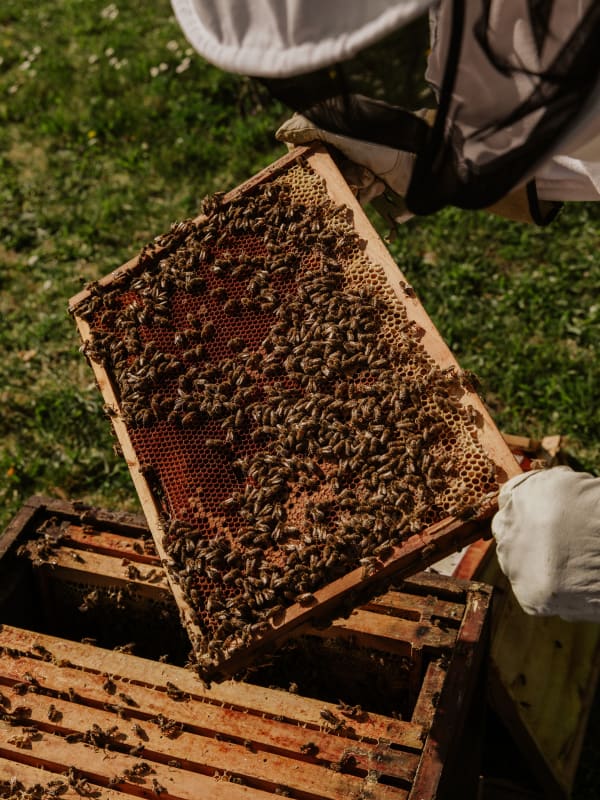
Manuka flowers only grow in New Zealand, and the honey bees make from their nectar fetches quite a sum: high-end Manuka honey can cost a hundred times the price of regular honey.
Peter Molan, a New Zealand professor, first discovered the fascinating antibacterial qualities of Manuka honey in the 1980s. It wasn’t until 2008 that methylglyoxal (MGO) was explicitly named- a highly active bactericidal honey component unrelated to hydrogen peroxide.
Antibiotic resistance is a genuine and growing concern. But, as far as we know, pathogens cannot develop any ability to withstand Manuka compounds.
Helicobacter pylori, the bacteria that causes stomach and small intestine ulcers, is powerfully inhibited by honey rich in MGO, as are many other strains of nasty bugs. It benefits bees too, by fighting off pathogens that threaten them, such as Nosema apis, a common single-celled parasite.
Manuka honey can also infiltrate biofilms, the sticky structures that multiple bacterial species use as a bunker to shield themselves from the immune system.
MGO appears to be primarily responsible for this remarkable ability.
Unique Manuka Factor (UMF) offers a lab-verifiable standard of antibacterial activity and sets authentic medicinal Manuka honey apart from disingenuous blends or knockoffs. Anything higher than UMF 10+ is considered a clinical grade, something to keep in mind if you decide to invest in this top-shelf honey.
Most bacteria flourish in slightly basic pH levels, but honey is about as acidic as grapefruit juice.
This quality alone wouldn’t achieve much, but honey’s low pH works in tandem with its hydrogen peroxide, natural osmosis effect, and other mixed phytochemicals to create a potent multifaceted antibiotic.
The bees collect phytonutrients, including phenols, terpenes, and organic acids, from flower nectar.
No honey has received more attention than the genuinely remarkable methylglyoxal found in authentic Manuka honey from New Zealand.
Honey is a complex and beautiful thing in its natural and unprocessed state.
But hydrogen peroxide, live yeasts, allergy-busting bee pollen, antioxidants, and enzymes like diastase, invertase, and glucose oxidase (the enzyme that creates hydrogen peroxide) are destroyed or deactivated by heat exceeding 37 degrees celsius. So look for raw, unpasteurized honey and avoid cooking it or overheating it.
A single ounce of delicious golden honey represents the combined efforts of no fewer than 1,000 different buzzing bees.
Honour their hard work with some of our favourite honey-featuring recipes.
Share this article